If brushing time turns into a wrestling match in your home, you’re far from alone. A few small changes can turn toothbrushing from a daily battle into something your toddler actually looks forward to.
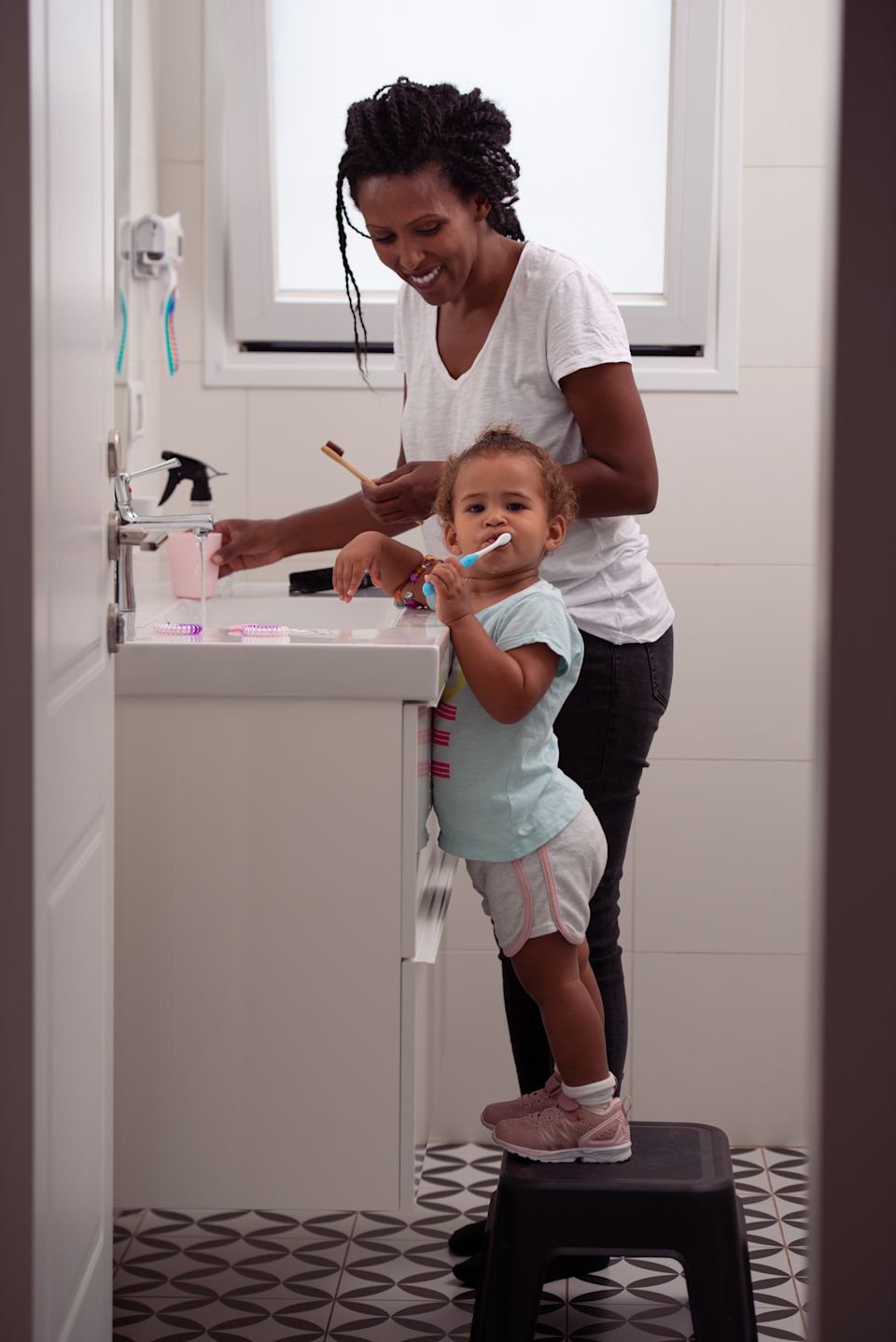
Getting a toddler to sit still for two minutes of toothbrushing can be a real challenge, even under the best circumstances. Brushing doesn’t have to be a struggle, though. With the right basics in place and a little bit of play mixed in, most toddlers can learn to enjoy it, or at least tolerate it without a struggle.
These basics can help all the tips that follow go more smoothly.
Place the toothpaste on the brush yourself to make sure it’s the right amount, and keep the tube out of reach. For children under 3, use a smear of fluoride toothpaste about the size of a grain of rice. For children 3–6, use a pea-sized amount. Know that around age 3, your child might want to squeeze it out while you check the amount, and that’s okay.
Let your child pick their favorite toothpaste flavor. Kids’ toothpaste is milder than the mint flavors many adults use, so it can be worth trying a few flavors to see what your toddler likes.
Brush the inside surfaces first, then the outside, then the chewing surfaces, using a back-and-forth motion at a 45-degree angle toward the gumline.
Brush twice a day, including before bed, and consider brushing again after sugary snacks. It’s usually easiest to brush a toddler’s teeth while they’re lying down, like at the dentist’s office. A changing pad or your lap can work well as a headrest.
Congratulate your child every time they brush. Positive reinforcement matters more than you might expect.
You don’t have to have every step perfect. A short, calm routine done consistently works far better than a long, tense one done occasionally.
Once the basics are in place, the real key to a smoother brushing routine is getting your toddler to actually want to be there.
Letting your child pick their own toothbrush, whether it’s a favorite character or color, can be fun. Little ones may also be more likely to brush if you let them go first and try it themselves before you come in to catch the spots they missed. Letting a toddler try first, even imperfectly, gives them a sense of control that can make the whole routine go more smoothly.
Modeling matters too. When young children see the people around them brushing their teeth, they tend to want to brush too. Brushing side by side, even briefly, shows your toddler that this is something everyone in the family does.
A little bit of play can turn brushing time from a chore into something your toddler looks forward to.
Toothpaste art. Before loading the brush, let your toddler squeeze a few small stripes or dots of toothpaste onto a white plate. It’s a simple way to practice the fine motor control of squeezing a tube, and it gives them a fun thing to do before the actual brushing starts.
More ways to make brushing fun:
Practice with a stuffed animal. Have your toddler “brush” a favorite doll’s or stuffed animal’s teeth to help them get comfortable with the motion, and to keep their toy’s smile healthy too.
Use a sticker chart. Some kids love seeing a fun sticker added after every brushing session, working toward a small reward once the chart fills up.
Play a two-minute song. Choose an upbeat favorite song and let your toddler brush along until it’s over. This also helps build the habit of brushing for the full two minutes.
Turn the toothbrush into a character. Give it a name, or pretend it’s a superhero fighting off cavity-causing “bad guys,” to make the whole routine feel like a story instead of a task.
Try animal sounds. Ask your toddler to roar like a lion and bare their teeth, which can also make it easier to reach their back teeth.
If your toddler has sensory sensitivities, small adjustments can make a big difference. Try warm water instead of cold, experiment with different toothpaste flavors, or start with a washcloth before moving to a soft-bristled or silicone brush. An electric toothbrush’s steady motion can also feel calming for some children.
Keep helping longer than you might expect. Most children need help brushing until they’re around 7 or 8 years old, since the coordination to brush thoroughly on their own takes time to develop. Letting your toddler try first, then finishing the job yourself, is a good way to build that skill gradually.
Don’t skip the follow-through. After your toddler brushes, avoid rinsing with water for about 15 minutes, since water washes away the fluoride that’s still working to strengthen their teeth. A quick spit into the sink in the meantime is enough.
See the dentist early. Most dentists recommend a first visit by your child’s first birthday, or within six months of their first tooth coming in. Early visits are often quick and gentle, with a simple look at your child’s teeth and time to get to know the dentist. This can help dental care feel familiar from the start.
With the right basics and a little creativity, toothbrushing can become one of the easier parts of your toddler’s day, even if it takes some trial and error to get there.