During the first five years of life, your child’s brain grows faster than at any other time in life. By age 3, their brain is already 80% of its adult size. Understanding stress matters a lot during these five years because this is when the foundation for all future learning, behavior, and health gets built.

When your toddler has a meltdown at the store or your baby cries at the doctor’s office, that can be a sign of stress. Some stress is normal and even good for kids. But too much stress for too long can actually change how your child’s brain grows. Understanding stress better can help you support your child during these important years of brain development.
When your child gets stressed, their body makes a hormone called cortisol. In small amounts, cortisol is helpful and gives your child the ability to handle challenges, like learning to get up after falling down. But when stress goes on and on without any interruption, your child’s body can make too much cortisol. This can change how brain connections form.
Stress affects three main parts of the brain:
The Hippocampus: This part helps kids learn and remember things. It also helps control how the brain responds to stress. Children who face a lot of stress often have a smaller hippocampus. This can make learning harder and make it more difficult to manage emotions.
The Prefrontal Cortex: This is the “thinking brain” that helps with planning and controlling feelings. Stress can weaken connections here, making it harder for kids to focus, follow directions, and manage emotions.
The Amygdala: This is the brain’s alarm system that watches for danger. With too much stress, this area can become too active. Your child might feel like they’re always in danger, even when they’re safe.
These changes aren’t just temporary. Stress during these early years can disrupt brain development and affect your child’s health for their whole life.
Not all stress is bad for kids. Learning to handle small amounts of stress, with your support, helps your child recover from setbacks and adapt to challenges. There are three different types of stress.
First, positive stress. It’s healthy, normal, and helps kids grow. It’s mild stress that goes away quickly, and it can be caused by everyday experiences like meeting someone new or getting a vaccination shot at the doctor. It teaches your child that they can handle hard things, especially when you’re there to support them.
Next, tolerable stress. This is serious but manageable. It activates your child’s stress response more strongly than positive stress, and it can be caused by things like a car accident, a death in the family, or moving to a new home. These events are harder for children to go through, but if they have you or other caring adults to support them, their brain can recover.
Finally, there’s toxic stress. Toxic stress is harmful and requires intervention. Toxic stress happens when a child faces serious problems for a long time and repeatedly, like emotional abuse, divorce, or the loss of a parent, and they don’t receive adequate support from an adult. That support helps them feel safe and helps buffer the effects of the stress. Without that support, their body stays in “danger mode” all the time, which floods their developing brain with stress hormones. This type of stress can hurt brain development.
Even in very difficult situations, your loving, consistent presence can transform toxic stress into tolerable stress. You are the buffer your child needs most. When you’re there to comfort and help your child, you protect their growing brain.
Young children can’t always tell you how they feel or what’s wrong. Instead, they show stress through their behavior and bodies. Here are signs to watch for by age:
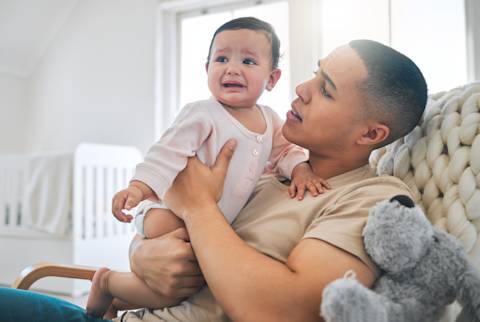
Hard to soothe: Crying for long periods or difficult to calm even with holding and rocking
Eating or sleeping problems: Refusing bottles, trouble falling or staying asleep, or sleeping much more than usual
Avoiding eye contact: Looking away or seeming distant, not engaging with you
Not interested in playing: Doesn’t reach for toys or explore like other babies their age
Delayed milestones: Not babbling, pointing, or reaching developmental markers
Overly clingy or overly passive: Either constantly needs to be held or seems unusually still and quiet
Getting sick often: Frequent colds, ear infections, or other illnesses
Hard time focusing: Can’t pay attention during short activities or follow simple directions
Trouble remembering: Forgets things they learned, like their daily routine
Big emotional reactions: Intense tantrums or meltdowns over small things, last longer or happen more often than they do in other kids their age
Pulling away: Less interested in playing with other kids, not wanting to go to places they used to enjoy
Sleep problems: Nightmares, bedwetting (if already nighttime potty-trained), scared to sleep alone, or trouble settling down
Going backwards: Loses skills they already had, like wanting a bottle again, baby talk, or potty accidents (if already potty-trained)
Body complaints: Frequent tummy aches or headaches with no medical cause
Always on edge: Seems worried, jumpy at normal sounds, or constantly watches for danger
Aggressive behavior: Hitting, biting, or pushing other kids more than what’s typical
Pretend play about scary things: Acting out violence or disturbing themes repeatedly
Every child has tough days sometimes, and that’s normal! Look for patterns that last weeks or months and that seem more intense than what you see in other children the same age. If you see these signs, getting help early makes a big difference.
Although young children are sensitive to stress because of their rapid brain development, at the same time, their brains can still heal with the right support.
First off, your love and support are the best protection against toxic stress. When you respond to your child’s needs consistently, you help their brain learn healthy stress control. For babies, picking them up when they cry isn’t spoiling them. Instead, it’s giving them your love and attention. For toddlers and preschoolers, the physical touch of giving them hugs or holding their hand can give them comfort. Also, getting down to their eye level when they’re upset and having them say their feelings out loud can help them learn that their emotions matter. When children feel loved and safe, their bodies make oxytocin. This hormone protects their brain cells and is even stronger than cortisol.
Regular routines can also help children feel safe and secure. When they don’t know what to expect, the amygdala is constantly on alert trying to figure out what comes next. Try being consistent throughout the day, like keeping the same times for meals, naps, and bedtime, or saying goodbye the same way every day.
Having “serve and return” interactions can also help build brain connections. Think of talking with your child like playing catch. They do something (serve), and you respond back (return). When your baby makes sounds, make sounds back and smile. Or if your toddler’s imagining they’re a chef and serving you food, pretend to eat and say how yummy it is. Happy moments build positive brain pathways that act as a buffer against stress. These connections are not only fun, but over time, they help build the strong foundation your child needs for learning, memory, and healthy stress responses.
Protecting your child’s brain happens in small, everyday moments. During daily activities, be present. Put away your phone during meals and playtime. Your attention shows your child they’re important and safe.
You can also help your child build emotional vocabulary by naming feelings—both yours and theirs. You can do this in two ways. Start by modeling and naming your own feelings out loud, like telling your child when you feel frustrated, happy, or worried. Then, name what you see your child experiencing by saying things like, “You look sad that your toy broke,” or “You’re so excited about the park!” This teaches your child that all feelings have names and that it's okay to talk about them. As your child hears you name feelings, they'll learn to name and manage their own emotions better.
Kids can tell when you’re stressed. Even babies pick up on your emotions. When you're overwhelmed, your child feels it too and may become more stressed. Taking care of yourself isn’t selfish. It’s one of the most important things you can do for your child.
If you feel frustrated, try taking deep breaths. You can also be vocal about how you feel, like saying, “I feel frustrated, so I'm taking deep breaths.” If you’re overwhelmed and need to step away, make sure your child is safe first, and say, “I need a break. I’ll be back in one minute.” You can also try splashing some cold water on your face to help slow your heart rate and breathing. Letting your child see that you’re in a stressful situation and are trying healthy ways to calm yourself down is an excellent way to model healthy coping. When you’re calmer, you can also respond to your child more patiently.
Your child’s growing brain may be sensitive to stress, but it’s also remarkably responsive to your love, consistency, and support. You may not be able to protect your child from all stress, but some stress, with your support, helps them build resilience. When hard things do happen or if toxic stress develops, your loving presence makes a huge difference. Every hug, every moment of patience, and every time you’re there to support them helps your child’s beautiful growing brain.