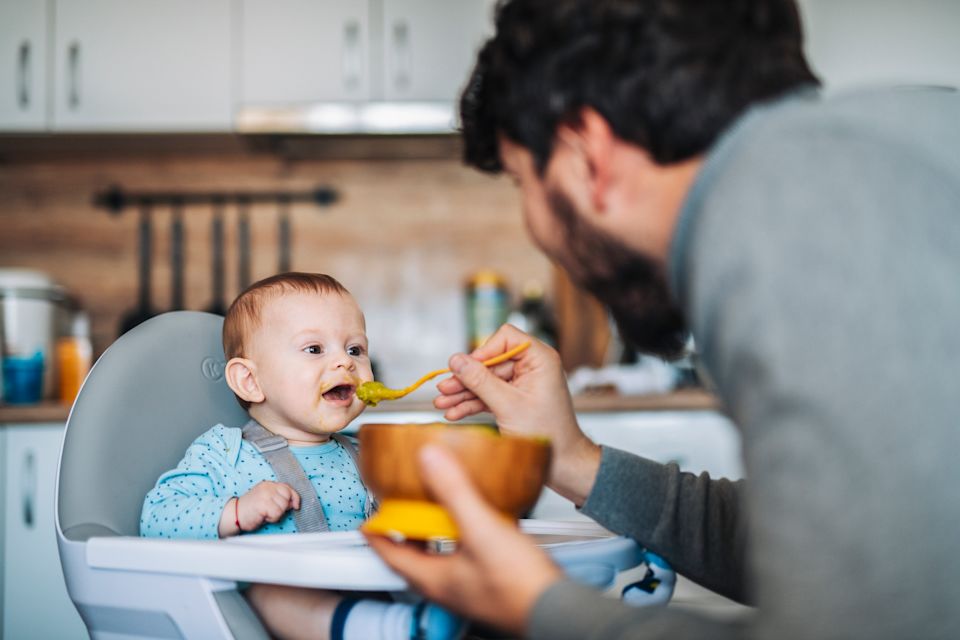
Watching your baby try their first bite of “real” food is such an exciting milestone! It marks a new chapter in their growth, but it’s also completely normal to have a lot of questions. Whether you’re feeling excited, a little nervous, or just ready for the mess, remember that this is a learning experience for both you and your little one.
Here’s a guide to help you navigate those first few bites with confidence.
Most babies are ready to try solid foods around 6 months old. But every baby grows at their own pace, and it’s more about the physical signs they’re ready than the actual date on the calendar.
Think of solid food as a “side dish” to breast milk or formula for now. At this stage, they still get most of their nutrition from their usual milk, so there’s no rush.
Every baby develops at their own pace, and their body will usually let you know when it’s time to move beyond breast milk or formula through these actions:
Good head control: They can hold their head up and steady on their own.
Sitting up: They can sit with little or no support (like in a high chair).
Curiosity: They watch you eat, reach for your food, or seem very interested in what’s on your plate.
The “tongue-thrust” reflex is gone: In earlier months, babies automatically push food out with their tongues. When they stop doing this and start swallowing food instead, they’re ready.
Opening wide: They open their mouth when they see a spoon or food coming their way.
There’s no “perfect” first food! You can start with whatever healthy options work best for your family. Many parents may choose:
Soft fruits and veggies: This might include mashed bananas, avocados, or cooked and pureed sweet potatoes and carrots.
Iron-rich foods: This is a great time to introduce foods that help their growing bodies, like pureed meats, beans, or iron-fortified infant cereals.
Different textures: You can offer foods that are pureed, mashed, or very soft and small. As they get used to eating, you can slowly move to thicker textures.
Find more meal inspiration in our guide to Healthy Eating for Babies and Toddlers.
It used to be thought that we should wait until a child was 1 to 3 years old before introducing “common allergy” foods (like eggs or peanuts). But the Centers for Disease Control and Prevention (CDC) now recommends introducing these foods as soon as your baby starts eating solids, typically around 6 months of age. Research shows that introducing them early in the transition to solid foods can actually help prevent allergies from developing later on.
What to watch for: Reactions usually happen quickly, from a few minutes to two hours after eating.
Mild signs: Look for hives (red, itchy bumps), a new rash around the mouth, or sudden vomiting.
Severe signs: Call 911 immediately if your baby has trouble breathing, seems very limp or weak, or has swelling in their tongue or throat.
When starting foods that are common allergens, offer them one at a time and wait 3–5 days before trying another new food. This helps you know exactly which food caused a reaction if one happens. It’s also a good idea to try these foods in the morning or at lunch so you can watch your baby throughout the day.
The goal for the first few months is just to get your baby used to the feeling and taste of food.
Start small: Try just 1 or 2 teaspoons at a time. If they aren’t interested, that’s okay! You can try again another day.
Frequency: Start with once a day, and as they get the hang of it, you can move to two or three small “meals” a day.
Follow their lead: If your baby turns their head away, closes their mouth tightly, or starts to fuss, they are likely telling you they’ve had enough. This is a great way to help them learn to listen to their own bodies.
Safety is the most important part of the kitchen. Here are a few “must-knows” for every parent:
Avoid choking hazards: Make sure food is very soft and cut into small, pea-sized pieces. Avoid hard foods like raw carrots, whole grapes, popcorn, or large chunks of meat. You can find a full list of foods to avoid here.
Skip honey: Do not give your baby honey (even in baked goods) until they are at least 1 year old. It can cause a serious type of food poisoning called botulism, which can be life-threatening.
No juice or sugary drinks: Stick to breast milk, formula, or small sips of water. Babies don’t need the extra sugar in juice.
Always supervise: Never leave your baby alone while they are eating. Always have them sit upright in a safe spot like a high chair.
You know your baby better than anyone. Some days they might eat everything you offer, and other days they might just want to play with it. It’s all part of the process. Be patient with the mess and the “funny faces” they make—they’re just discovering a whole new world of flavor.