Because your child’s abilities can change week to week, it helps to revisit your home safety plan regularly, not just at the newborn stage. Childproofing isn’t a one-and-done task. The outlet covers and cabinet locks you installed when your baby was tiny might not be enough once they’re pulling themselves up to stand using furniture, climbing onto chairs, or reaching countertops that used to be out of range.
Here are some childproofing basics that cover what changes as your child grows, room-by-room checks worth repeating, and a few risks that are easy to miss until your child is already climbing.
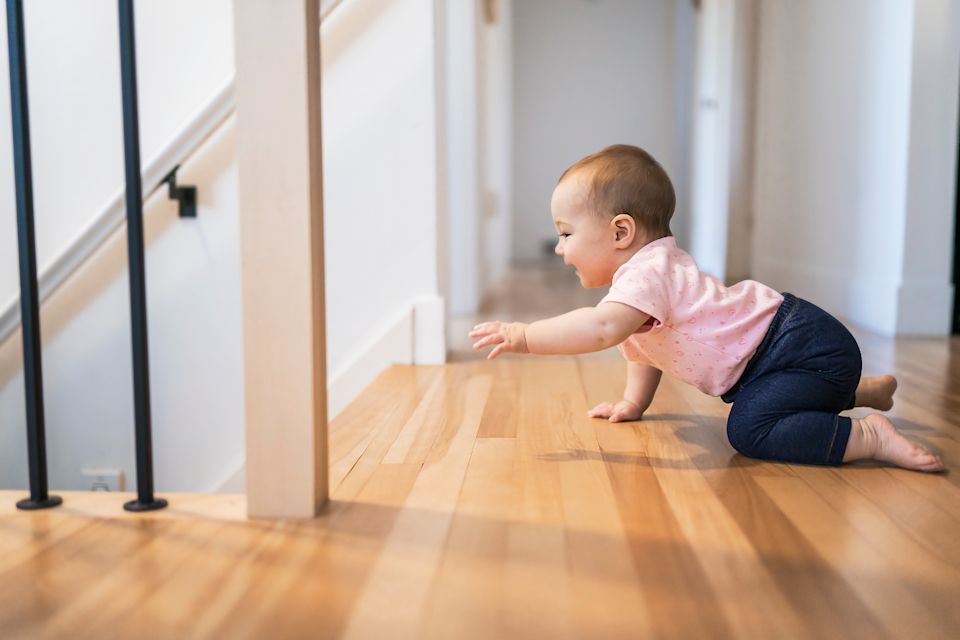
Every new motor skill can open up a new hazard. A baby who has just learned to roll might reach the edge of a changing table for the first time. A baby who pulls up to stand can suddenly reach a lamp cord or a bowl of fruit on the coffee table. A toddler who has mastered climbing might scale a bookcase to reach a toy on the top shelf.
Often, injuries happen because your child is a fast learner. They will suddenly learn to roll over, crawl, sit, and stand. They may even climb before they walk or start walking with support months earlier than you expect. Because of these fast-arriving new abilities, your child will fall often, so it’s important to protect them from injury before the new skill fully appears, not after.
A simple habit can help: Every time your child hits a new movement milestone, such as rolling, sitting, crawling, pulling up, cruising, climbing, or walking, take a few minutes to look at your home from their point of view. At the crawling stage, this can mean padding furniture with sharp corners and removing anything that might tip over if your baby grabs or pulls on it. Once your baby is cruising or pulling up to stand, look for hazards that may have been previously out of reach, like cords on blinds. Be sure to also check that bookshelves and other furniture are anchored to the wall.
A quick walk-through of each room, done at each new stage, can catch hazards before they become a problem.
Living areas:
Attach heavy furniture to the wall or floor so it doesn’t tip over.
Add soft corner covers to sharp edges like coffee tables and TV stands.
Move breakable or dangerous items out of reach, such as vases, candles, knives, scissors, or anything heavy that could fall.
Place plastic covers over electrical outlets and power strips, and check them once in a while since older covers can loosen or go missing.
Install a carbon monoxide detector in every sleeping area of the house to protect your family from this poisonous, deadly gas.
Kitchen:
Store knives, small appliances, and cleaning products up high or in a locked cabinet.
Keep pot handles turned inward while cooking. Once your child can reach the stovetop, consider a stove knob cover too.
Bathroom:
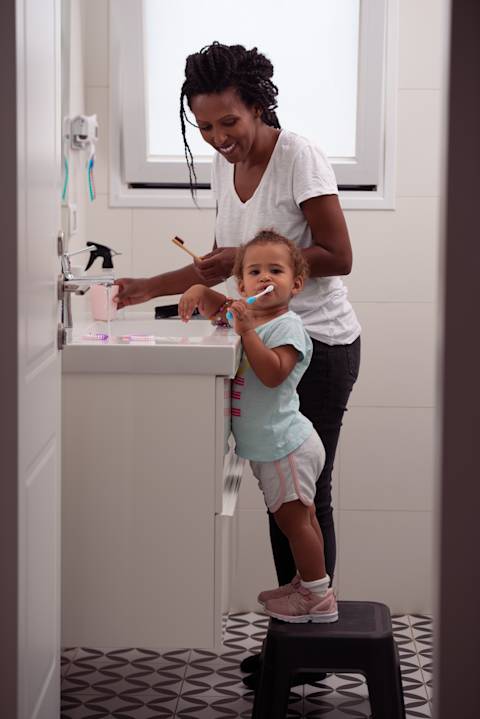
Keep medications, vitamins, and personal care products in a locked cabinet, not just up high. A climbing toddler can reach higher than expected.
Never leave a young child alone near water, even briefly. This includes time in the bathtub or near a toilet.
Keep household cleaning products, hand sanitizers, bug sprays, lotions, and makeup out of reach or in locked cabinets, not just in the bathroom, but throughout the house.
Bedrooms and nursery:
Once your child begins to climb, fill a chest of drawers from the bottom up. This can help prevent furniture, especially lightweight furniture, from tipping over and trapping your child underneath.
Keep cribs and beds away from windows, blinds, and cords.
Recheck the crib mattress height once your baby can pull up to stand. A mattress set too high makes it a lot easier for a toddler to climb out.
Stairs and hallways:
Install hardware-mounted safety gates at the top and bottom of every stairway, since pressure-mounted gates aren’t as secure. Avoid accordion-style gates, which can trap a child’s head.
Keep stairways clear of toys, shoes, or loose carpeting and rugs that could cause a slip.
Never leave babies and toddlers alone around stairs, even gated ones, since they can climb the gate itself and fall from an even greater height.
Outside:
Install a fence that’s at least four feet high around your pool or hot tub to prevent drowning, and install a self-latching gate that’s higher than a young child’s reach.
Never let your child play near grills, lawnmowers, or power tools.
Return garden tools, auto parts, pesticides, fertilizer, and sharp objects like nails and screws to locked storage containers after each use.
Empty buckets and small inflatable pools after every use, since a young child can fall and drown in just a few inches of standing water.
Make sure play equipment in the backyard is sturdy, in good shape, and age-appropriate for your child. As your child starts climbing, check that equipment intended for older children isn’t within easy reach.
Repeating this room-by-room check every few months, or right after a new skill appears, can help you catch hazards while they’re still easy to fix.
Tip-overs are one of the most serious and most overlooked hazards in the home, and they’re closely tied to a child’s growing ability to climb. Young children are naturally curious and driven to explore. But they’re also too short to reach the tops of tall furniture, where interesting objects like a phone or remote control often sit. As an example, a toddler can pull out a dresser’s drawers one by one to use them as steps, causing the TV on top to fall.
To help prevent a tip-over in your home:
Anchor bookcases, dressers, and shelving units with wall straps or brackets, available at most hardware stores for a low cost.
Only place televisions on furniture designed to hold a TV, such as a stand or media center, and follow the manufacturer’s instructions for anchoring it.
If wall-mounting isn’t possible, use anti-tipping devices and check that the furniture is stable.
Avoid placing a TV on a dresser or other furniture that a child could climb.
Avoid placing items on top of furniture that might tempt a child to climb, such as toys, remotes, or snacks.
About half of fatal tip-overs happen in bedrooms, sometimes when parents believe their child is asleep, so anchoring furniture in the nursery and bedroom is just as important as in the living room.
Climbing is an exciting milestone, and it’s also a normal, healthy part of your child’s development. Learning to climb teaches children about balance, builds strength, and enhances hand-eye coordination. Rather than trying to stop climbing altogether, redirect your child toward safe activities, like climbing toys or a soft play structure, while addressing hazards in the rest of the home.
Once your child can climb, keep an eye on:
Cribs. If your toddler is climbing out of the crib, it’s worth lowering the mattress to its lowest setting and removing anything in the crib your toddler could use as a step. If a toddler is regularly climbing out, the crib is no longer a safe sleep space for them, and it may be time to consider a toddler bed.
Countertops and tall furniture. A child who can climb a chair can often reach a counter, table, or even a shelf. Push in chairs and remove step stools when they’re not in use.
Windows. Install window guards on all windows above the first floor, since a climbing child can reach a windowsill more easily than expected.
Play equipment and stairs. As children become more mobile, safety hazards increase, so caregivers need to supervise closely, especially when toddlers are climbing stairs, furniture, or playground equipment.
It’s worth noting that some wobbling and falling is a normal part of learning to climb safely. The goal isn’t to prevent every fall but to remove the hazards, like unanchored furniture or unguarded windows, that could turn a small fall into a serious injury.
Whether it’s a grandparent, babysitter, or childcare provider, anyone who looks after your child in your home should have the same safety information you do. A quick handoff checklist can make sure nothing important is missed:
Emergency contacts. Give caregivers a complete emergency contact list, including your preferred phone number, your child’s doctor, allergy details, medications, and a reliable backup contact.
Local emergency numbers. Beyond 911, share local fire, police, and Poison Control numbers, along with a simple plan for emergencies like a fire.
Health details. Note any allergies, current medications with dosages and times, and where to find basic first aid supplies.
A home safety tour. A quick walk-through of your home helps a new caregiver feel confident. Show them where safety gates are, which cabinets are locked, and any areas that are off-limits.
Daily routine. A simple rundown of meals, nap times, and bedtime routines helps caregivers keep your child comfortable and on schedule.
Where you’ll be. Share your address or location for the day, along with your expected return time.
Keeping this information written down, whether on the fridge, in a shared note, or in a folder, means a caregiver has what they need if something unexpected comes up.
A handful of smaller, easy-to-miss hazards are worth adding to your safety refresh:
Cords and blinds. Cordless window coverings are safest. If you have corded blinds, keep cords wound up and out of reach since a child can quickly get tangled in them.
Batteries and magnets. Small button batteries and strong magnets, often found in remote controls or toys, are a serious swallowing hazard. Store spare batteries in a locked drawer and check that battery compartments in toys are secured with a screw.
Doorstops and door knobs. Spring-loaded doorstops can present a choking hazard if the rubber tip comes off. Consider a solid, one-piece design instead. Door knob covers can help keep a curious toddler from wandering into an unsafe room.
Pet food and water bowls. These are easy to overlook but can be a choking or drowning risk for a baby on the move, so keep them out of their path when possible.
Your home’s biggest hazards often change right alongside your child’s biggest achievements. A quick, regular safety refresh, room by room and briefing any caregiver who steps in, helps you stay one step ahead as your child rolls, crawls, cruises, climbs, and eventually runs through every room in the house.