Have you changed yet another diaper today and thought, “When will this ever end?!”
With the right timing, approach, and patience, you can help your child make a big step toward growing up: potty training. Then, you’ll be able to finally say goodbye to those diaper changes.
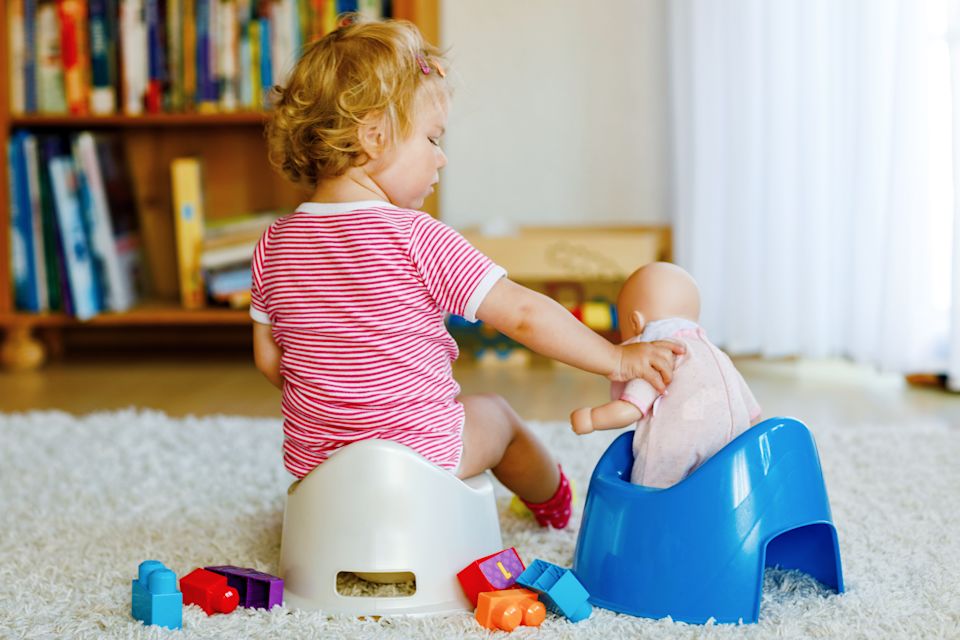
Not all kids are ready to use the potty at the same age. Most children begin to show ready signs when they’re between 18 and 24 months old, though some may not be ready until later. Boys also often start later and take longer to learn than girls, and that’s completely normal.
Look for these specific signs that your child may be ready:
They can stay dry for longer times: Your child should be able to keep a diaper dry for at least two hours at a time. Check their diaper every hour for a few days to see if this is happening.
They show interest in the bathroom: They follow you to the bathroom, want to watch you use the toilet, or ask questions about what you’re doing.
They can walk well and sit down and stand up on their own: They should be able to walk without falling and get on and off a couch by themselves.
They can tell you what they need: They say words like “pee,” “poop,” “potty,” or “diaper.” They might also point to their diaper, make faces, or go hide when they’re about to pee or poop in their diaper.
They want to do things by themselves: They try to dress themselves, feed themselves, or say “Me do it!”
They go to the bathroom at regular times: Your child has predictable bathroom habits, like pooping around the same time each day (like after breakfast, for example).
They can follow simple directions: They understand and can follow instructions like “Come here” or “Sit down.”
They show pride in independence: They smile when they do something new or get excited about “big kid” things.
Times when you might want to wait:
During big life changes like moving, starting daycare, or having a new baby
Within two weeks of any major change in routine
When your child is sick, teething, or dealing with family stress
If you’re going through a hard time and can’t give steady attention for at least a week
Many parents find that their child learns to pee in the potty quickly but won’t poop there. This is actually very common.
First, your child might not be ready yet. If your child won’t poop in the potty, they just might not be ready to stop using diapers. Before you start potty training, make sure most ready signs are there, not just a few. Here are other reasons why this happens and tips to work through it.
Fear can be a problem. Pooping into the toilet can be scary for a lot of kids. Some reasons could be: They feel like they’re losing a part of their body when they poop, they may not like it if the water splashes on their bottom, or they may worry about being sucked into the toilet.
Tips: Start by letting your child practice flushing toilet paper to get used to the sound. Let them watch the water go down and explain that only waste goes down, not people. If they’re afraid of falling in, you might try using a potty seat with handles and a step stool so their feet touch the ground. You could also try a small potty chair first, then work up to the big toilet.
Being constipated makes things worse. A child who has had even one painful time with hard poop will try to avoid pooping anywhere, including the potty. This makes the problem worse because holding in poop makes it harder and more painful later.
Tips: Offer your child water every hour throughout the day. Give them more fruits that can help with constipation like apples, berries, pears, peaches, or plums at snack time. Add vegetables like broccoli and peas to meals. Talk to your child’s pediatrician or a health professional about gentle solutions if the problem continues for more than a week.
Your child wants to be in control. Some children would rather sit in a messy diaper and show their power than go when and where they’re told to go. Kids might feel powerless because everything is decided for them, so bathroom habits can become one area where they feel they can take control.
Tips: Give your child choices: “Do you want to use the big potty or little potty?” Let them pick out special underwear. Ask them to help you set up the bathroom with supplies. Avoid asking “Do you need to go potty?” Instead say, “It's potty time!”
The 3-day potty training method is an intense approach that can work well for children who are truly ready. Toilet training can take just a weekend, but you have to pick the weekend that works best for you.
The method means staying home for three full days while your child goes without diapers (and often without bottoms) to learn to use the potty. The idea is that this focused approach helps children better understand what it feels like to need to go.
Day 1 (Friday):
Start your first day by taking off the diaper and explaining to your child, “Today we’re learning to use the potty like big kids!” Throughout the day, take your child to sit on the potty for 2–3 minutes every 15–30 minutes, even if they don’t go. Watch carefully for signals like squirming, holding themselves, stopping what they’re doing, or making faces that show they need to use the bathroom. Give them lots of drinks by offering water or juice every 30 minutes so they have plenty of chances to go. When accidents happen, stay calm and say, “Oops! Let's clean up and try again,” and let them help with the cleanup. Celebrate every success by clapping, cheering, and saying “You did it!” when they use the potty.
Day 2 (Saturday):
Continue the same pattern from day one but start to notice your child’s natural bathroom times throughout the day. Create a regular schedule by taking them to the potty when they wake up, before and after meals, before naps, and before bed. Watch for improvement as they should start to recognize the feeling of needing to go. Practice good habits by teaching them to wash their hands after using the potty.
Day 3 (Sunday):
If your child is doing well with fewer than 3–4 accidents per day, you can add short trips outside the house. Always use the bathroom before leaving and as soon as you get back home. Bring extra clothes and make sure to find bathrooms wherever you go. Keep praising their progress with encouraging words like “You're learning so fast!” or “You remembered to use the potty!”
For naps or nighttime during these 3 days, try using pull-up diapers for protecting the bed while your child's body learns to wake up when they need to go. You might also try putting regular underwear over the pull-up to help your child remember they're in “potty training mode,” even while sleeping.
You might ask yourself if the method is working. To answer this, look for good signs like your child telling you when they need to go or feeling bad when accidents happen. Watch out for signs that it's not working, such as no interest in the potty or crying when taken to the bathroom. If it’s not working, don’t worry! Go back to diapers and try again in 4–6 weeks.
Accidents are part of learning, but it helps to know what to expect. During the first week of potty training, your child is still learning to recognize the feeling of needing to go, so your little one may experience the most accidents during this time. By the second week, you should see improvement as they get better at listening to their body’s signals. After the first month, your child may experience just 1–2 accidents a day, usually when they’re too busy playing or are in unfamiliar places.
How to handle accidents calmly:
Take a deep breath and remind yourself this is normal.
Say something neutral like, “Let's get cleaned up.”
Have your child help with cleanup if it’s appropriate for their age.
Change clothes without making a big fuss.
Remind them gently, “Next time, try to get to the potty earlier."
Many parents wonder when their child will stay dry through the night. However, nighttime dryness often comes much later than daytime training. Most children aren’t ready for nighttime training until several months after daytime training is complete, and it’s common for children to wet the bed through age 7.
You'll know your child might be ready when their pull-up is dry for 5–7 mornings in a row, they wake up at night asking to use the potty, they can walk to the bathroom safely in the dark, or they sleep for at least 6–8 hours without wetting their diaper.
Step-by-step nighttime training:
Week 1: Put them in underwear for naps only. If they stay dry for 5 naps in a row, move to step 2.
Week 2: Try overnight without pull-ups and only underwear, but have waterproof sheets ready.
Week 3: If they’re staying dry most nights, continue. If not, go back to pull-ups for another month.
Tips for nighttime success:
Stop drinks 1–2 hours before bedtime (but don’t let them get thirsty).
Make sure they use the potty right before bed, even if they say they don’t need to.
Use a small night-light so they can see the bathroom.
Keep the path to the bathroom clear of toys and furniture.
Use waterproof mattress covers under the regular sheets.
If accidents happen, clean up quickly and quietly without making them feel bad.
Talk to your child's doctor if:
Your child is 4 years or older and not yet potty trained during the day
You think hard poop is causing problems for more than a week
Your child was successfully potty trained for 3+ months but suddenly starts having regular accidents
Your child cries, screams, or seems scared when taken to the bathroom
You see blood in their urine or poop
Your child is 5 years or older and still wetting the bed every night
You’ve tried for 6 months with no progress
Signs that mean “take a break”:
You’re feeling stressed or angry about potty training.
Your child cries or fights going to the bathroom.
You’re having more than 8–10 accidents per day after two weeks.
Major life changes are happening (new baby, moving, starting school).
If you find yourselves needing a break, usually 4–8 weeks is enough time for the both of you to reset and try again. Remember, every child learns at their own speed. Some children are ready early, while others need more time. You’re there to support them by watching for signs of readiness, offering guidance, and celebrating progress along the way.
Potty training is a big step toward growing up for your child and perhaps a big relief for you. With patience, staying steady, and the right timing, you’ll both get through this milestone successfully. Soon enough, you’ll be celebrating this big-kid achievement and might even miss the diaper days!